Before any machine digs on a property, there is a call that has to happen first. It takes a few minutes, it prevents some of the most dangerous and expensive mistakes in excavation: hitting a buried power, gas, water, or communications line.
This article explains why we call 811 before digging, what Idaho law asks of anyone who digs, and what that means for homeowners and builders planning utility work in eastern Idaho.
Why a New Home Site Has So Many Lines
A new home needs power, fiber optic lines, water, and sewer or septic. We put in the trenches for those utilities, and we run power in for the other contractors to use while the house is built. Even on open land, there can already be lines running across or alongside the lot, and the new lines have to be routed around them.
The ground does not tell you what is under it. A trench that looks clear can be a few inches from a buried cable. That is why locating existing lines comes first.
What Idaho Law Asks
Idaho law requires anyone digging to contact the state's one-call service by calling 811 before they dig, so the utility companies can mark where their underground lines run. The notice has to be made at least two business days before the work starts, and no more than ten business days before. Markings are not forever, so planning the call to fit your dig date matters.
The rule is not only for professional excavators. If you are planning to dig on your own property, check the requirements and make the call before you start.
What the Marks Mean
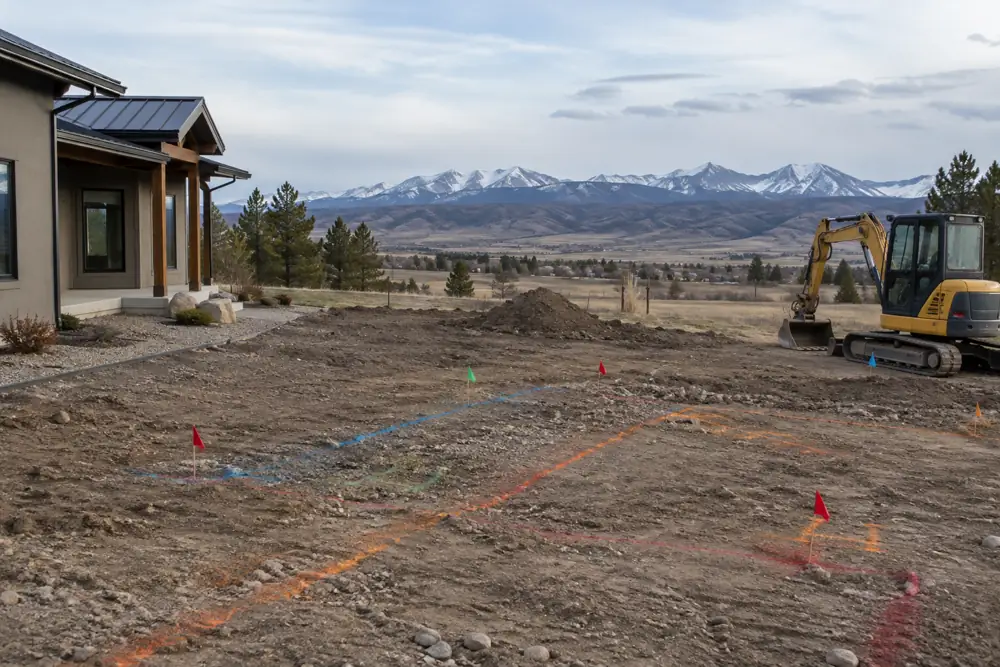
After the call, utility locators mark the approximate path of their lines with paint or flags. Different colors stand for different types of utilities. Those marks are approximate, so we dig carefully near them and treat the area as one where lines could be closer than expected.
Planning Utility Trenching Around It
Here is how this shapes a typical job:
- Plan the routes. We decide where power, fiber, water, and sewer need to go on the lot.
- Call before digging. The 811 notice goes in at the right time for the work date.
- Wait for the marks. We do not start until the utilities have responded.
- Dig and lay the lines. Trenches are dug to the route, the lines go in, and we backfill.
- Inspect where required. Utilities and the septic system are inspected before they are covered.
Why Early Planning Helps
Because the notice has a window, utility work works best when the schedule is planned ahead. If the trenching date moves, the timing of the call may need to be redone. Talking with us before the dig date lets us line up the call, the marks, and the other trades, such as the well driller and the plumber, so nothing is waiting on anything else.
Common Mistakes to Avoid
- Assuming that a rural or empty lot has nothing underground.
- Calling too early, so the marks fade or the notice lapses before digging.
- Digging before every utility has responded.
- Forgetting that a request for one trench does not cover work somewhere else on the property.
When You Should Talk to Us
If you are planning a new home or a utility run, bring the question to us early. We can help you think through routes and timing so the 811 call, the trenching, and the other trades line up. You can read more about our utility trenching work, or send us a message about your lot.
For the full order of work on a new home, see our guide to the build sequence.